Tuesday, July 28, 2020

Making soaps throughout history: Castile Soap

Hello Soapsmith Nation!
Olive Tree, Castile Spain

I have been reading about how soaps were made in various parts of the world and at different points in history and I thought it would be fun to recreate some of them. I started simple with probably the most commonly known soap which is a castile soap. In my interpretation a castile soap is a 100% olive oil bar although sometimes anything that is mostly or all vegetable oil is also called castile soap (I disagree with this so I did what I consider to be a true castile soap). I did add one small twist so I wouldn't have to wait for close to a year before using it. I used a method called dual lye which uses 5% potassium hydroxide (KOH) and the remaining 95% is sodium hydroxide (NaOH) as my lye. Soap made with KOH is more soluble in water and can help boost the lather of this bar soap. There is a chance it will be "softer" than a regular sodium hydroxide only bar soap but castile soaps are rock hard once they have had a good cure so I was not worried about that. This sounded more like a soap I would enjoy over some of the traditional single lye castile soaps I had made in the past. This is currently curing, I plan to try it at the 4 week cure mark to see what it feels like and if I like this new to me method of making an olive oil bar of soap. 

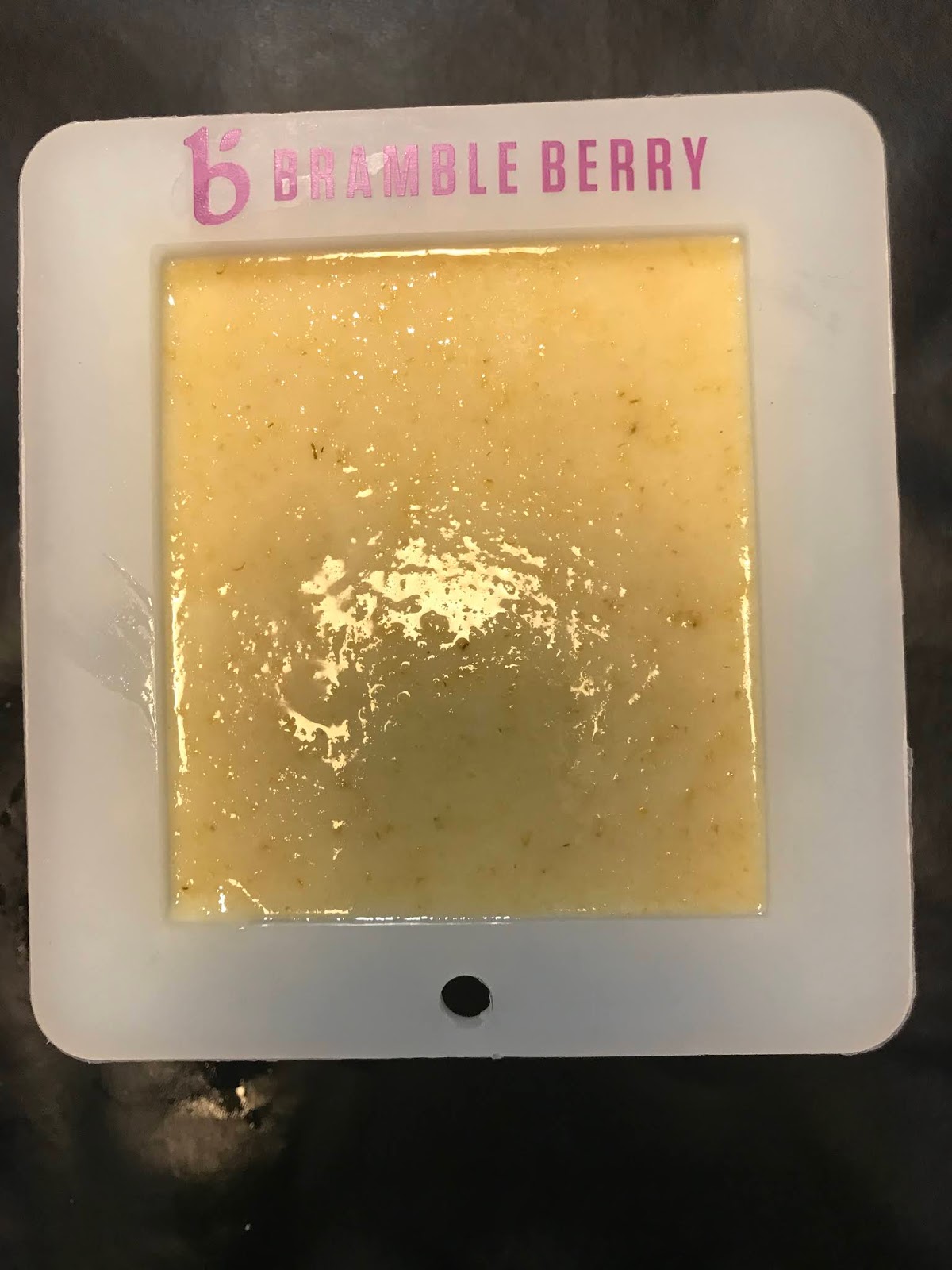
Some things I noticed about the making process of this soap was that while it took some time to reach emulsification it was shorter than I expected, maybe 30 minutes of me intermittently mixing and hand stirring. After those 30 minutes I felt I had a good emulsification and placed it in the mold to do its thing. I left this batch uncolored and unscented (there is something so lovely about the sweet nuttiness that an unscented soap has to it). I wrote in my notebook that it was still very "wet" about 10 hours later and to reduce the water portion next time but I was able to unmold within 24 hours without manipulating it in any way so it really was not a huge issue. I used a full water portion which I sometimes do with new formulations before I start tinkering and making changes. So, would I reduce the water for next time? Yes most likely I would so I can unmold with in about 12 hours but is it absolutely necessary to do so? Not in my opinion. 

Where would a 100% olive oil soap be historic to? Well the story goes
that it is "truly" historic to Castile Spain but we all know that olive trees are very common in many regions of europe and eastern europe, desert regions such as Syria and also parts of Africa so what I have been able to find are variations of types of olive oil soaps from many places which is pretty neat. 

So join me on this fun little journey through soaping history as I attempt to make a variety of soaps as close to the traditional recipes as possible. When possible I hope to use traditional methods just to see how the process may have been done in the past.


Stay soapy my friends
~Your Soapsmith


Wednesday, April 22, 2020

Calculating your soap mold

Hi There! Today I am going to give you 3 ways to figure out the size of your soap mold today. 

Method #1: Sometimes when I need to know the size recipe I can fit into a mold I cheat and look it up on the site I purchased it from. But for those times that I either can't remember where I got a mold from, if it's been discontinued or even if it is a homemade mold like a milk carton or pringles can for instance there is a calculation for figuring this out. AND it's quite simple :)

Method #2: The below formulas will give an answer in ounces but this can easily be converted to grams if that it your preferred working unit.

For square and rectangular molds: 


Length x Width x Height = X
X x 0.4 = Oz of oils needed (this number can be used in the soap calculator.)


If using centimeters your multiple is 0.7 instead of 0.4

If you need this in pounds take the ounces needed and divide by 16.
Example: 12” x 4” x 3” = 144”
144” x 0.4 = 57.6 oz always round down to prevent over-pouring so 57 oz of oil will fit into this mold.

In pounds this would be 57.6 oz / 16 oz = 3.6 pounds

For cylinder molds:
3.14 x radius squared x height of pour = X

Radius is the distance from the center of the circle to the edge. The  diameter is the distance across the entire circle. So a 3" round PVC pipe has a radius if 1.5"


X x 0.4 = Ounces of oils needed
Example: To figure out for a 3" round by 12" height of a cylinder mold:


3.14 x 1.5" x 1.5" x 12" = 84.78"
84.78" x 0.4= 33.91 ounces of oils (round down to 33 oz).

Method #3: As a third option if you are unsure of your math skills or just to confirm that you did your math correctly you can also place your mold on your scale and tare to "0" then fill with water to the height you want your soap to be. Soap is more dense than water so your batch may be a little shorter than you anticipate but it will get you pretty close without going over. This method will get you the full size of your batch, water, oils and lye.

I hope these tips and tricks help you in your soap making and calculating endeavors. Please feel free to ask questions!

As always,
Your Soapsmith


Wednesday, March 18, 2020

Oat Milk Soap (palm free!)

This is part 2 of the great oat caper! I've always wanted to partake in a caper, this may be the closest I get so let's just roll with it. To read about part one in which I made home made oat milk for this project click here

Recently I formulated twelve, yes, TWELVE new recipes and will be working through them all and writing (and possibly making videos) of the adventures. I am also going to be working with additives that I typically do not work with, it's a sort of learning and growing experiment that I am taking you all on. Today we will be using a palm free recipe that also contains shea butter. When I make test batches I make them at 1-lb each, large enough to have 4 nice sized bars to test out but not so large that I am wasting ingredients if a batch doesn't work out.

Let's look at our oil profile:
I choose olive, grapeseed, coconut, shea butter and castor oils. 

Olive oil has a pH of 5.5 which is the same as the sebum on our skin so it's quite complementary and found in many soaps and skin care products. It is medium in weight, mild and conditioning. It does not make great bubbles and can make a soap feel slimy in high amounts.  It can also slow down trace and take longer to cure in high amounts. It can product a surprisingly hard bar of soap for being a liquid oil. This is the oil used to make a true castile soap.

Grapeseed oil offers medium lather and mild cleansing. I have read accounts that this oil is prone to a short shelf life and may cause early rancidity and possibly DOS in your finished product. I have read other accounts that it has a normal shelf life too so I am still forming an opinion on this myself. Personally I have not had grapeseed oil become rancid or ruin any products so I decided to use it in this recipe. It's always a good idea to ensure you are purchasing your oils from a reputable source. If you are purchasing from a grocery store make sure it's a store that is busy enough to be able to turn over their products at a regular rate, this will help to ensure as fresh an oil as possible.

Coconut oil- creates a hard bubbly bar of soap. In high amounts (above 30%) it can create a drying bar of soap. To accomodate for a high % of coconut oil you would need to increase your superfat. For today though we are using a lower amount so it should not be an issue.

Shea butter- is mild and produces a creamy stable lather, it will also contribute to a long lasting bar of soap.

Castor oil- this is a special oil that has earned an interesting story in history, click here to read about how it was used as a form of punishment. It is the only oil to contribute ricinoleic fatty acid. It acts as a humectant and contributes to bubbles in soap.

I typically also add sodium lactate to my batches but for this project I am going to skip it so I can see how this recipe acts without it. I am curious to see if a palm free recipe will be as hard as I typically like.

Remember the oat "bits" from yesterdays milk making session? Well I saved them and added some at 1Tbsp PPO. So essentially since this was a 1 pound batch I added 1 tablespoon at light trace.

Below is the recipe listed by percentage. Please run through a soap calculator to get the size you need based on your chosen mold. I like this calculator if you need a recommendation:

Super Fat: 5%
Water Content (oat milk in this instance): 35%

Fragrance oil: 0.5 oz PPO

45% Olive oil
12% Grapeseed oil
20% Coconut oil
17% Shea butter
6% Castor oil

Notes: Since we are using a thick liquid that has solids which will account for part of its weight I chose to keep the water content on the high side. I also wanted to know if any of that mild, sweet oat scent will come through so I am doing my fragrance at half the amount I typically would do. Also, I am using oatmeal, milk and honey fragrance from Brambleberry, it's such a nice soft and sweet scent, very pleasant and plays very well in soap. You can find that fragrance here if you are interested.


Oatmilk soap in test mold.


Post soaping notes: So I made the soap and unmolded, cut and cured it and am now coming back to add my batch notes. Overall I am very happy with the hardness this palm free recipe was able to provide and will definitely make it again. This soap performs great too, it is bubbly and long lasting, smells great and has some light exfoliating due to the oat bits I added.
Some things I will do differently are to cut the amount of oat milk to about 50% and dissolve my lye in 50% distilled water before adding the oatmilk. Another way to handle this is to increase the water amount using to make the oatmilk. They reason I just cut the amount and also use water is because I like to SEE that my NaOH is completely dissolved and with an opaque liquid I can't tell. It's a matter of preference really. I might also add the oat milk to my oils instead of the lye water so the lye water will not burn off the sugars. There are a couple of different options on how to work with this recipe. I was otherwise very pleased with the recipe and really happy that I did the fragrance at half the normal rate too, it was just such a soft, sweet and subtle hint. Perfect for this batch.  

If you try this recipe or do a version of it let me know, I'd love to hear how it went and what changes you tried to make it your own.

Happy Soaping until next time.
~Your Soapsmith


Wednesday, March 11, 2020

Making oat milk in preparation to make an oat milk soap

Howdy Soapsmith Nation! I am working on some new recipes with additives I have been wanting to try out. After 10 years of making my tried and true recipes I have decided it's time to, once again, spread my wings and make some new awesome recipes! 

I wanted to work with oatmeal for a recipe so I decided to make it into oat milk first. Let's take a step back and look at the skin care benefits that oats can impart for us.

There are properties that will carry through saponification and some that will not carry through but are present in other skin care formulations, let's talk about both!

  • Inexpensive and readily available
  • Typically low allergenic and good for all skin types including problem skin
  • Can provide some exfoliation
  • Contains anti-oxidants and are anti-inflammatory
  • May treat dry skin and remove dead skin cells
  • Contains a compound called saponins which are natural and mild cleansers
Some talking points that may not carry over into soap but are relevant to other skin care formulations are:


  • Helps to keep skin hydrated by forming an occlusive layer on the surface that retains water in the skin
  • Imparts moisturizing, soothing, conditioning, and nourishing qualities, significantly improving skin dryness and roughness
  • Helps reduce skin inflammation making it ideal for treating inflammatory skin conditions
I would be more interested in adding colloidal oatmeal to a lotion or butter to see if I could get these results. As an aside this would make a wonderful set, a lotion and soap both with various forms of oatmeal in it.

I also looked into what oatmilk/oatmeal might do for a soap formulation and what I found is not that much so I changed gears and looked up some nutritional value in hopes to find properties that may come through in a soap.

1. sugar content - 1.1g per 1 cup - might contribute to more bubbles (may also not be enough to make a difference.)
2. gluten content - this is tricky, technically oats ARE gluten free but if they are not processed in a gluten free facility they shouldn't be marketed as such. I am starting to see more people asking and searching for gluten free soaps so this is a good point to remember.
3. protein content- 6g per 1 cup (probably irrelevant to soap...)
4. fat content - 3.2g per 1 cup- maybe slightly relevant as it could contribute to superfat but probably not in a significant way.
5. sodium content 115mg per 1 cup, we do know that salt can contribute to a harder bar of soap so this might also be helpful, but again based on how small of an amount it is it's probably not significant.
There are also vitamins A, B, C, Iron and Magnesium listed, there properties will most likely not survive saponification though.


Alright so now we know what oats can bring to this party, let's make oat milk!

I combed through the internet and saw many variations on how to do this. Many of them had similarities so it makes it kind of easy to give this a go. In the end I decided to use a loose version of what it on the actual oatmeal container and see how that worked out. 


As a side note pretty much all recipes recommended using old fashioned oats as opposed to steel cut or instant and all recommended blending immediately instead of letting soak because it makes for a slimy mixture (this is probably more relevant to the folks that want to use it in coffee).

Here is what I did:
2C oats 
4C water (recommendation to use distilled for soap making). 

Instructions:
1. Add water to oats, mix with spatula then hand blend for about 30 seconds. Let sit for roughly 30 minutes to thicken.

After 30 minutes it was a thin porridge consistency and I was happy with the size of the oat pieces. 

BUT

I stepped away for approximately an hour to handle something and then it became more like a thick porridge which I did not want. This may have worked to my advantage because I determined that I wanted oat milk and not oat porridge for this project. So I went ahead and strained the milk with a wire strainer and it became a nice, thick milk with some pieces which will be great as an exfoliant.

I managed to pull off about 1C of oat pieces (grains? I don't know
what to call them now). Which left me with about 1C still in my oat milk. For me this is very doable.

I weighed out and froze the portion of oat milk I will need for the upcoming soap recipe. I also set aside the extra oat....pieces as I can add them back in to my recipe as an additive. 

Ok so stay tuned for part 2 of this little adventure when I reveal my recipe and we make a super sweet batch of oat milk soap!

~Ta for now
'Soapie

References:
https://www.schoolofnaturalskincare.com/11-benefits-of-oatmeal-for-your-skin/


Wednesday, February 26, 2020

The first E-Book is finished!


Well I finally did it! I wrote a soap making book. I have been wanting to start writing books related to bath and body product making for awhile and I am really pleased with the final result. I went through and detailed out all the big important parts that every beginner should know such as safety, equipment, supplies and provided a couple of basic recipes that can easily be made using oils and fats found at a local grocery store. I also included other information that I wish I had known as a beginner (you don't NEED to have every single supply offered by soap making supply vendors to succeed, for instance!) 


There is also some neat bonus information that go into a little bit of detail about additives including color, fragrance, special liquids to use like milks and beer and then an extensive troubleshooting section as well as references and resources (and a first timers shopping list too!)

This project was a labor of love and really sparked a creative part of my mind that I completely enjoyed. I plan to write and publish many more in the coming years because it gives me great joy to watch and encourage other novice makers to succeed in what I find to be a fascinating industry. 

To purchase this book please check out our site: https://www.soapsmithspgh.com/collections/e-books/products/beginner-soapmaking-guide-e-book

It's truly been a pleasure to research and write both this blog and this first e-book, I look forward to being able to share more in the future.

~Your Soapsmith


Monday, December 30, 2019

A look back on 2019

It's been a busy year here at the studio both personally and professionally. I just re-read my 2019 goals blog and am feeling like I actually was able to accomplish what I set out to do. For the company one of my main goals is always to be as environmentally friendly as possible. I spent countless hours researching packaging options and making decisions regarding which would be the most friendly both for the environment while staying budget friendly. As a small company we sometimes have less options because we are simply not able to purchase in the quantities that large companies are able to. Also some packaging that I REALLY wanted to use required specialized equipment which made it not feasible for us. I also tried some new ideas over the summer at the markets such as a bulk filling option for lotions and scrubs AND I left all my soaps unwrapped and sold them by weight instead of by one flat price. It was a neat concept and I was excited to see how many people supported the idea but since people come to markets not expecting to purchase in bulk I ultimately was still providing the containers for filling. I DO think that people are open to this concept and would embrace it in a store if given the option. I also think that by participating in these markets I helped people to know about us as local makers which I think is also an environmentally friendly move.

So what did I end up doing about packaging? Well I offered 2 options for containers at the markets a 4oz glass jar or a 2oz PCR (post consumer recycled) plastic container. It's not virgin plastic so I felt better about using it but it's also not a perfect solution in my mind. The problem with glass is that my products sometimes end up in a shower or being held by wet hands and the glass just simply is unsafe at that point. For those reasons I do not find glass to be a great solution for bath and body products. 

As for other packaging options I looked into I love the idea of compostable packaging but as far as those container options go I really could not find any that would hold up to products like scrubs and lotions, the containers would have broken down before the product was able to be used and also the container would not have held up in wet environments making it possible for mold, yeast and bacteria to grow thereby negatively impacting the product. I did have an idea to use mini milk cartons for refills for people but those actually require special machines to fill and close the container, also the minimum buy was insanely high, it was not a feasible solution unfortunately. I did go back to shrink wrapping my soaps for now. The system I use is called Biolefin and it is a biodegradable plastic that begins to breakdown within 18 months of being used and finishes its cycle within 3-5 years. I like this because unlike compostable materials it will breakdown regardless of where it is disposed (trash, recycle bin, compost etc.) whereas some compostable materials will not break down unless properly disposed. So if the consumer is not aware or does not have access to a composting system then the compostable material simply becomes another piece of trash in a landfill. 

Packaging is complicated is really what I learned this year, there is no simple one-size-fits-all answer. As new technology comes out and as the zero waste movement pushes large manufacturers to think through these issues more critically though I think that small companies will also have more green options available to them, I will never stop looking into what the next best solution might be.


Shampoo Bar
One great product that came of all this zero waste interest was it pushed me to develop a shampoo bar. I spent the year learning about hair and proper surfactants to use on it and then got to formulating. I wanted a product that was long lasting, gentle and vegetarian. I actually formulated three different bars and had a very strong front runner from the get go. These babies have been selling like hotcakes and I couldn't be happier. For me a shampoo bar can last 3-4 months or more if my hair is fairly short. For others that have purchased them they agree with this. This replaces the plastic shampoo bottles which is a huge win! I currently have a conditioner bar in the works and hope to release it in 2020, the conditioner bars seem to last much longer thus far. 

As for personal goals we have been doing really well on our zero waste journey. I did not need to buy any plastic storage bags this year because we were able to stay in the groove of using the silicone storage pouches as well as our normal food storage containers. We also tried misfit market and really liked it, I stopped it for the summer because we support a local CSA farm share and did not need both but we will go back to misfit market now that that has stopped. It provided great variety and none of the items we got were unusable which was great! We did lots of little things which are green such as upgrade the lighting in our house to include more LED options and also have sensors on our outdoor lighting so it only comes on when needed. In my opinion every little thing counts when trying to do better.

So how was your 2019? What goals did you set and were you able to hit the mark? What will be your goals for 2020?

'Till next year (next decade!) my friends, 
~Your Soapsmiths


Monday, October 21, 2019

Ingredient Highlight: Mineral Oil

This is an ingredient which has been demonized in the bath and body products industry unjustly. I find that when I need a super healing type of lotion which happens in the cool dry winters we have where I live I always want a lotion with mineral oil as one of the ingredients. I want to take the time in this post to simply lay out the facts of what mineral oil is and why it is beneficial to many products. 
Fun facts:
1. It's a natural ingredient as it comes from the earth
2. It's also a vegetarian and vegan ingredient as it contains no animal by-products
3. It's non-comdogenic (does not clog pores)
4. It helps skin to retain moisture (which is why it is so great in winter skincare products)
5. There are different quality grades of mineral oil going all the way up to food grade
6. The mineral oil found in skin and beauty formulations is very pure, it is also regulated by the FDA to ensure these claims
7. Some of the most high end skin care products in the industry have mineral oil as an ingredient
https://www.cremedelamer.com/product/5834/12343/moisturizers/creme-de-la-mer/moisturizer-for-dry-skin#/sku/26766


8. It gives excellent "slip" and helps products to slide across the skin
9. It is commonly recommended as a post surgical skin protectant after procedures due to its long history of safety and effectiveness

Ok so why all the hate? 
I did a little googling to see what others are saying about it, here is what I found:
1. mineral oil is toxic
2. mineral oil "may" be carcinogenic
3. mineral oil clogs pores
4. It makes your skin look more aged than it is
5. It damages skin
6. It dries the skin out
7. It sits on top of skin creating a film and "suffocating" the skin 
8. It blocks the absorption of vitamins into the skin

This information was obtained from websites that had no scientific evidence to back it up. Some claims did have links to scientific papers that theorized that maybe, possibly these facts might be true but the research was actually done on crude mineral oil which is used in industrial capacities and not cosmetic ones. Some sites quoted estheticians who have famous movie star clients, but that doesn't make them an authority on the matter, while they probably excel at giving a rocking facial they are in no way scientists. They  just happen to have a bigger platform to influence unwitting people who find these trash articles and take them as gospel.

The above "hater" points are completely unfounded, meaning I have NO clue where the writers contriver their information so I couldn't do further research. Other points I believe have been handed down over the years and are now regarded as fact. Just know that absolutely ZERO of the above points are true or accurate. 

Here are a few reasons that mineral oil is awesome in products. 
1. It forms an occlusive barrier to help prevent TEWL (trans-epidermal water loss) Our bodies are in a constant state of water loss, to have a product available to help with this issue is pretty neat. I think of mineral oil containing products as a thin sleeve holding all the other fabulous ingredients close to my skin while they slowly sink in and work their magic.
2. It has been around since at least the 1700's and probably longer than that. The 1700's was the first time Merriam-Webster has record of the term Mineral Oil. The longer the history of use the more we have to go on as far as safety and effectiveness of an ingredient. 
3. It is inexpensive! This is actually a good thing. Even the highly refined very pure mineral oil is an excellent price. This is a great addition to a product and gives the formulator extra room in their budget to add other higher end ingredients to make your epidermis sing.
4. It ranks very low on the skin irritant scale, and if you are allergic to nuts and thereby nut oils this may be a great alternative for you

So there you have it folks, mineral oil, the forgotten hero in skin care. If you are having dry skin problems this winter give it a try and see what you think.

Peace
~Smithy

The "GO MINERAL OIL" articles
https://www.chemicalsafetyfacts.org/mineral-oil/
https://www.sciencedirect.com/science/article/pii/S0378427417311542
https://www.self.com/story/beauty-myth-or-fact-mineral-oi
https://thebeautybrains.com/2006/11/the-top-5-myths-about-mineral-oil-part-1/
https://thebeautybrains.com/2006/12/myths-about-mineral-oil-part-2/

The nay-sayer articles:
https://www.bewell.com/blog/3-key-reasons-to-avoid-mineral-oil/
https://www.allure.com/story/mineral-oil-skin-care


Tuesday, October 15, 2019

Reading and understanding Safety Data Sheets, aka SDS (formerly known as MSDS)

I had to learn about Safety Data Sheets (SDS) many different times throughout my schooling and then later in life in my professional career as well. It occured to me that maybe not everyone is familiar with them and I find them immensely helpful to refer to from time to time so I wanted to share what they are used for and why they may be helpful to you someday.

Safety Data Sheets were formerly known as Material Safety Data Sheets or MSDS, this terminology change was announced in 2013 and enforced in the end of 2015 to mid 2016 with the goal of making them more consistent and easier to understand across the board. They now adhere to something called the Globally Harmonized System of Classification and Labeling of Chemicals (GHS). There are even pictograms associated with this new system which is helpful for a quick reference.

There are 16 distinct sections to an SDS sheet:
1. Identification
2. Hazard(s) Identification
3. Composition/Information on Ingredients
4. First Aid Measures
5. Fire Fighting Measures
6. Accidental Release Measures
7. Handling & Storage
8. Exposure Controls / Personal Protection
9. Physical & Chemical Properties
10. Stability and Reactivity
11. Toxicology Information
12. Ecological Information
13. Disposal Considerations
14. Transport Information
15. Regulatory Information
16. Other Information

The first 8 sections are set up for quick reference for the people transporting and handling the chemicals as well as any emergency responders should there be an issue.
Sections 9-11 handles technical and scientific data. Sections 12-15 are not actually mandatory but they are required to be GHS compliant and section 16 will contain information on the SDS itself such as revision dates and changes since last version.

Employers are responsible for making sure there is an SDS sheet for every chemical on site and they must be available for employee reference in their immediate work area. These would most likely be for any cleaning agents in the workplace however essentially ANY product or raw material (i.e. base ingredients) can have an SDS sheet. 

Even "natural" products such as Dr. Bronner's Soap has SDS sheets as well as base ingredients such as Olive Oil. I am pointing this out because I have heard misinformed people many times refer to the information on an SDS sheet of a raw material while trying to make a point about the safety of the entire product. This is always going to be inaccurate because the SDS sheet is informing about the raw material in its most concentrated form and not as the material as used within a formulation in a diluted form. I have read countless times someone who pointed out that the person handling "xyz" ingredient has to wear a respirator or hazmat suit or face mask to handle the ingredient so that must mean it's not safe. WRONG! This reasoning could not be further from the truth. I wear gloves and sometimes a respirator when mixing sodium hydroxide which is a necessary part of making handmade soap but that in no way means that the soap is dangerous or unsafe simply because sodium hydroxide was used in the making process. It simply means that in its concentrated form I am aware that it could cause me harm so I protect myself. 

So there you have it, SDS sheets in a nutshell. Links are below for further reading if you wish.

Stay wise my friends, 
~Your Soapsmith

https://chemicalsafety.com/online-sds-databases/
https://www.osha.gov/Publications/OSHA3514.html
https://fscimage.fishersci.com/msds/96356.htm
https://www.drbronner.com/retailers/material-safety-data-sheets-msds/


Friday, October 11, 2019

Ingredient highlight: Aluminum

Well hello again. I've been a busy bee these past few months and have been lax on posting. But I have been thinking about topics I wanted to research and write about so here I am for a long overdue ingredient highlight on Aluminum. I have been wanting to know more about aluminum in body care ingredients for awhile. They are one of those "scary" ingredients and I wasn't completely sure why so I went on a quest. 

Let's start with the basics. What is aluminum? Aluminum (Al) is a silvery-white, soft, nonmagnetic metal. Aluminum is the third most abundant element (after oxygen and silicon), and the most abundant metal in the Earth's crust. It makes up about 8% by mass of the crust. Aluminum metal is so chemically reactive that native specimens are rare and it is usually found combined in over 270 different minerals. The chief ore of aluminum is bauxite. 

In what products is aluminum primarily found? Aluminum-containing raw materials are used safely and extensively in cosmetics, pharmaceuticals and over-the-counter (OTC) drug products. In cosmetics, they function as pigments and thickening agents. Aluminum compounds also function as active ingredients in OTC drugs such as antacids and antiperspirants. Because aluminum is present in soil, most exposure comes from foods we eat and the water we drink.  Studies demonstrate a negligible potential for Aluminum salts to penetrate the skin. Any small amount absorbed from the use of cosmetic products, would be tiny in comparison to the amounts we consume in the foods we eat daily.
https://cosmeticsinfo.org/aluminum

Next I asked the Google "How does aluminum work in anti-perspirants?" This answer popped up: Aluminium-based antiperspirants work by blocking the sweat ducts, thereby reducing the amount of sweat that reaches the skin's surface. ... When they are applied to the skin and come in contact with sweat, the pH rises causing the aluminium salts to precipitate out and form a plug over the sweat glands.  https://www.dermnetnz.org/topics/antiperspirant/

Then I navigated over to cancer.org and typed in "aluminum". Have you ever been to this site? It seems good, they present information in a very neutral way which I like. On their site they first outline the claims that are going around and then they proceed to address them with facts that are backed up by scientific studies. If the studies that they reference are weak (or later disproven as it sometimes happens) they are up front about that as well, all in all I like this site. Anyway I digress back to my findings on the site about aluminum. In a nutshell through all the solid studies that have been done there is no link between aluminum and breast cancer. The information they had there was extremely insightful and there was quite a bit of it too, instead of repeating what they have written I am adding the link and encouraging you to take a look at the information there, it's a great read > https://www.cancer.org/cancer/cancer-causes/antiperspirants-and-breast-cancer-risk.html

Another concern I read about was aluminum exposure and a possible link to alzheimer's or dementia. This is of particular concern and interest to me because I have older relatives that have suffered with this affliction and we really don't know what caused it. So I dug in on the site alzdiscovery.org. Their information was neat because it spoke of aluminum use in multiple capacities from being in the drinking water to being in anti-perspirants. At this time all research is pointing towards the fact that neither of these diseases are caused by aluminum. I am dropping the link to their site below for your reading pleasure as well.  
https://www.alzdiscovery.org/cognitive-vitality/blog/is-there-a-link-between-aluminum-and-alzheimers

Now I think it would be abundantly easier on society as a whole to just find that "bad" or "dangerous" ingredient that causes all the ailments what make people sick and just eliminate it but things will never be that easy. Certainly there have been recalls of products and ingredients which were believed to be safe then found later to either be unsafe or ineffective or highly allergenic or otherwise unusable to the public at large but it's not that common. Why you may ask? Well simply because before an ingredient is even available to be used in a formulation it's been tested extensively and exhaustively to know the safety data. Staple ingredients like aluminum are then placed on a list by the FDA of acceptable to use for _____ in this case I am referring to its use in antiperspirants. Aluminum is, in fact, the ONLY ingredient that the FDA has listed as approved in creating a product that acts as antiperspirants do.
You can search through product recalls here>>> https://www.fda.gov/safety/archive-recalls-market-withdrawals-safety-alerts/2018-recalls-market-withdrawals-safety-alerts

It seems that there were more issues with food or drug items being recalled due to contamination or concerns over sterility (in the case of drug manufacturing) than over an ingredient that was going to cause cancer or some other disease.

As always I encourage those in my tribe to be informed consumers and know the relevant data backed resources in which to pull information from when trying to make a decision about the health and safety of yourself and your family. There are great resources available to us in this day and age thanks to the internet. There are also terrible resources available because every "Karen" and "Chad" with an internet connection can just write whatever pleases them and some are convincing enough to sway public opinion which I think is a real shame. When I am looking for answers I turn to science and I always will. I hope that whatever resources you trust are ones that are keeping you and yours on a safe and happy path in life.

'Til next time
~Your (science nerd) Soapsmith


Thursday, July 25, 2019

We are on Pinterest!

Yahoo! We have a presence on pinterest and I have been filling it with a bunch of fun (and good) DIY bath and body recipes, eco friendly and zero waste ideas, funny animal pictures and more! 

Check us out here!


This is fun, it kind of gives me a place to put recipes that catch my eye and just another way to connect with you all. So tell me, what are some recipes you have come across that you want to try but are unsure (for whatever reason)? Feel free to submit questions and I will do my best to help you out. Also are there recipes you are looking to make but are unsure if what you are finding is worth your time? Based on what I have seen I can imagine that this is tough sometimes. I am here to help!!!

Happy pinning my friends.
~Your Soapsmith


Wednesday, July 24, 2019

A soapmakers notes from a small island

View as we arrived
Greetings from across the pond! That's right I am in the UK this month. I have loads of family still residing in both Ireland and England so it is nice to be able to come over for a visit. So far I have spent about 5 days around and about London (Wow! What a big and busy city!) size and bustle-wise it definitely rivals New York City, it even seems that it may be bigger but maybe that's just because I am not as familiar with it as I am NYC. As with any big city there is tons to see and do, the weather surprisingly has not been too rainy. We had one day of torrential downpours and all others have either been completely perfect or a tad on the warm and humid side, although nothing like New York in the summer (also much less stinky!) 

Westminster Abbey 
So far I have seen Westminster Abbey. Talk about a building full of dead folks! I literally could not walk 2 feet without being on someone's grave, it was a little unnerving at first. We did find Stephen Hawking's grave which was neat. There is also a poets corner which I rather liked.


Shri Swaminarayan Mandir
Shri Swaminarayan Mandir (the largest Hindu temple outside of India). This was an amazing off the beaten path find. It is a little outside of London and absolutely beautiful. No interior photos are allowed which is kind of nice because you have to be in the moment, enjoying the rich culture and history that is Hinduism. We walked the main "chapel" area where the gods and deities reside, I found it to be a very spiritual and special time. In the downstairs of the building is a really great exhibition that explains what Hindu is, I completely enjoyed myself. There is also an Indian restaurant and grocery store across the street so of course I had to pop in for some proper indian food (totally worth it!)

Harry Potter Walking Tour.....& RAIN
Later that day we got to go shopping at Harrods and the following day we did a Harry Potter walking tour through the city (in the pouring rain).  The walking tour was loads of fun despite the rain. Our guide was knowledgeable about HP of course but also about the city itself. Some of my favorite non-HP takeaways were seeing the Globe theater and also the Borough market a huge open air market that has been in operation since around 1020AD! 


We got to see Windsor Castle from the outside (the lines were nuts!)
Windsor Castle (the queen was in that day!)
and strolled the town of Windsor, we also visited a little village called Denham Village as that is my maiden name so of course we HAD to take a peek. (it's won awards for being the best kept village multiple years!) Sunday we were aiming for a lazy day and I thought a walk through Hyde Park would be just the ticket before heading to a small local blues fest in another park later that day. BTW soft serve ice cream here is called Mr. Whipee, HA! 

Stonehenge
On Monday we packed up the London Flat and headed for the countryside stopping off at Stonehenge first or course, which was magnificent! There is so much more to this place than just a bunch of big stones mysteriously placed. It was built over a very long period of time and by many different groups of people, it makes me wonder what about this place is so special.


After that we headed to our cousins country house in Bristol which is just lovely. It is quiet and spacious which is a nice change from the city as always. We barely set our suitcases down and were whisked off to see our younger cousin play in a cricket match! Now- I am not sure, dear reader, if you have ever seen a cricket game but I have not. I liken it to being vaguely similar to baseball with less bases and more rules.... 

Wells Cathedral
Yesterday we met MORE cousins which was lovely and went to the town of Wells where much of the movie Hot Fuzz was filmed. It was so cool walking the streets that a movie I like has been filmed on. After a quick refresh in the pub we did a driving tour of a super hippie dippie town called Gloucester which apparently has roots in the King Arthur tales (I need to get myself back there someday). We then drove through Cheddar gulch. It was really beautiful and there are these cute little wild sheep that hop all around on the rocks and eat all the grasses. This is the home of cheddar cheese as I am told because there are many caves around the area which are perfect for ageing cheddar in. I love cheese and was sad we didn't have time to stop and sample it (all). It just gives me an excuse to stop back ;)

WHEW! Gosh that was a lot! I am a bit tired today so I vetoed doing any activities today in lieu of just lounging around (a girl needs a break!) Tomorrow we will be back on track with more fun and adventures with family so that will be nice. I leave you with a few pictures, enjoy.....

Where are everyone's summer vacations taking them this year?

TaTa for now
~'Smithy'

Thursday, July 18, 2019

Essential Oils, the series- Part 3


Howdy Soapsmith Nation! I hope all are well and enjoying their summer (winter if you are in the Southern Hemisphere of course). 


I seemed to have skipped right over part 2 of my essential oil series and dove right into the heart of part 3 so here you go. I sometimes eat dessert before dinner.....so....yeah. This post really digs into one specific term that is often heard and very misused.

I am frequently asked what brand of essential oils I use in my products and always happy to answer the question. However I sometimes believe that the person asking is hoping I will say I use the oils of one or another of the large and well known MLM companies which have a serious foothold on the aromatherapy industry at the moment. Let me tell you something, if I used the oils from those companies my products would not be affordable. Those companies do not sell in bulk and are intended for individual use only (oh and also, they prohibit the marketing of their oils in products intended for resale.) So for many reasons I do not use their oils. 

While I assume their oils are as good as many other companies I do not believe them to be superior, I also typically find their reps to be un- or undereducated in the safe use of essential oils which ticks me off because the reps are totally passionate about their products, these companies should invest in them by properly educating them. 


That's for another post on another day though. Today I want to write about a specifically misleading marketing term. The term is Therapeutic grade. This term popped up at some point in the 90's and many companies jumped on the bandwagon stating that their oils were also therapeutic grade. There are no quality standards for authentication and no tests and determines the grades of ANY essential oils. In fact have you ever seen a grade A, B, C or D? Nope because it's not a thing. 

I am going to drop a link into the bottom of this post because the woman who wrote it was very clear and concise, I couldn't have written it any better (nor would I have written it differently so why plagerize her work?) There are a few other terms that she brings to light with really great explanations. Please take a look and expand your knowledge base. Next time someone starts spouting off about therapeutic grade (blah, blah, blah) you can smile that smile that people do when they know a really great secret  ;)


because what is cuter than this!?
The quality of essential oils 

Man we are a smart bunch of cookies today! 

TaTa my friends
~Soapy


Thursday, July 11, 2019

Watering down liquid soap to make it last longer

Today I am going to write about a topic that has brought me angst for ages. I have finally decided to speak up on this. All too often I will be at someone's house and need to wash my hands and spy a soap dispenser at the edge of the sink and go squirting away with the soap only to discover that it has been watered down beyond belief (like seriously.....it's not even soap sometimes!). Well I typically stand there and try to decide if I want to wash my hands with what is most likely bacteria laden bubble water or if I just give up and feel like a dirtball until I get home. Sometimes I reflect upon a third option.....which is to rub my hands really hard on the towel that is usually nearby, as if that will accomplish anything.


Ok let's talk about liquid hand soap that you would buy in the grocery store. I am specifically talking about the commercially made stuff which sometimes has additional ingredients to make it anti-bacterial and sometimes just cleans and moisturizes. Ultimately they all accomplish the goal of cleaning in some capacity. These products are typically created from lab made synthetics and are a balanced formula including their preservative when they go into the bottle. SOOOOOO.....when you add water to this formula you are diluting out everything including the preservation system thereby making it ineffective. 

Why does this matter? You are subjecting the thing that you bought to clean your hands to microbial growth, yes, you are effectively going to end up washing your hands with bacteria, fungus and yeast (YUCK!) Why use the soap at all I ask? This also goes for a hand made liquid soap, if you purchase it from someone and it's ready to be used then guess what.....it's a balanced formula too and will become unbalanced if you start tinkering with it. 

Well what about those nifty little soap foamer things? The soap that goes in to them is formulated to be thinner and has the appropriate amount of preservative so they can do their job and not be subject to microbial growth. Taking regular soap and adding water will still get you a bacterial filled foamer which as we now know is just gross.


What about concentrated products that say specifically to add water to them? Good question, follow the instructions on the bottle and you should end up with a safe and effective product. OR if you must over dilute it for whatever reason make sure you finish it up in one use.


The two most common argument I hear for watering down liquid soap is that it's either too expensive and this helps the pocketbook or that you will be at the store in a few days and just need to stretch it until then. Look, I hear both arguments and acknowledge that life is tough both on the pocketbook and on the freetime-o-meter. If it's too expensive, switch to bar soap, I promise you that it WILL clean your hands. If you need to stretch your soap for a few days just remember that microbial growth can start in as little as 24 hours. 

This, my smart and savvy friends is my PSA on watering down liquid soap. If you ever see me standing at a sink twitching you can pretty much assume that I am standing there wondering what to do about my dirty hands and why on earth someone else has gone and watered down a perfectly balanced product.

All the best to you in perfectly formulated bubbles
~Your Soapsmith